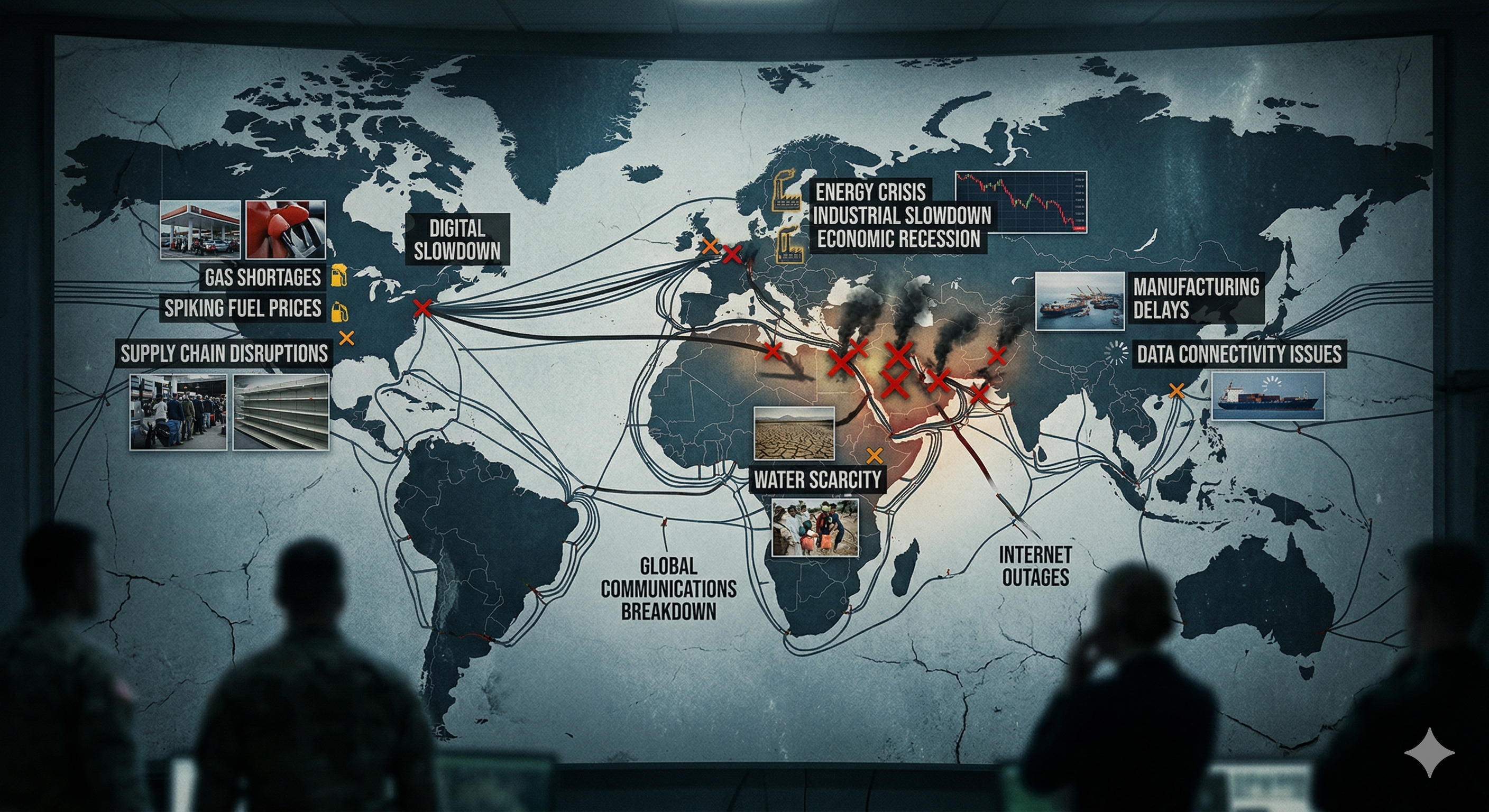
The Middle East is a primary global “data chokepoint,” and recent escalations have moved the risk from theoretical to operational.
Because 95%–99% of all intercontinental data travels through undersea cables, and nearly 17%-30% of global internet traffic passes through the narrow Red Sea and the Strait of Hormuz, the region acts as the digital equivalent of the Suez Canal.
Why the Risk is Significant
The danger to global data flow comes from three main directions:
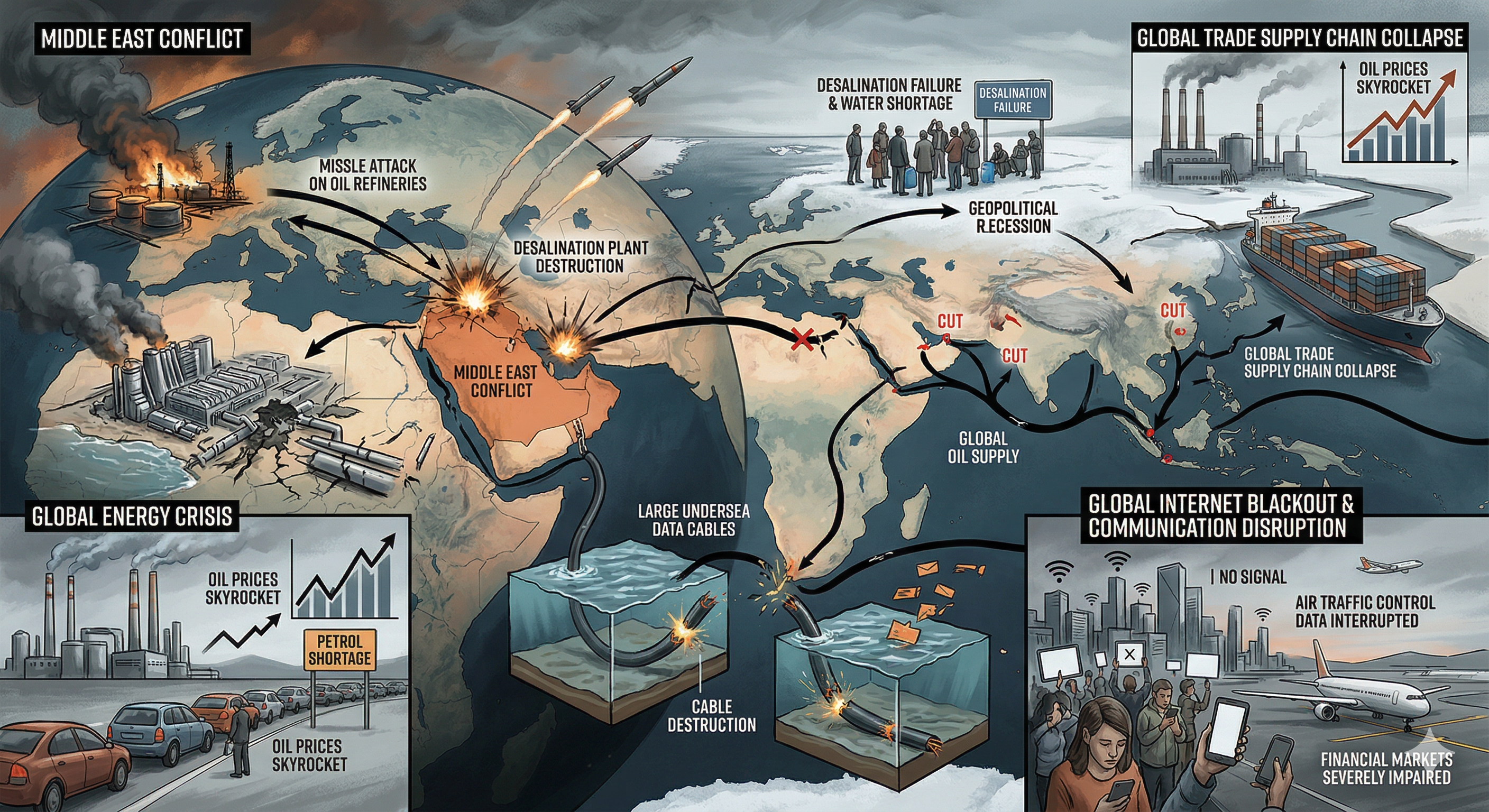
- Physical Vulnerability: The cables are remarkably fragile—no thicker than a garden hose—and are concentrated in shallow waters like the Bab al-Mandab Strait. In late 2025 and early 2026, multiple cables (including SMW4 and IMEWE) were severed, causing immediate digital “darkness” or severe latency in parts of India, South Asia, and the Gulf.
- Repair Challenges: In a war zone, specialised cable-repair ships cannot operate safely. Insurers have begun dropping coverage for these vessels, and some maintenance ships have been “stranded” off the coast of Saudi Arabia due to security threats. A repair that usually takes days can now take months.
Targeting of Data Hubs: Kinetic warfare has expanded to terrestrial infrastructure. In early 2026, strikes hit civilian and commercial targets, including Amazon Web Services (AWS) data centres in the Gulf, forcing tech giants to pause major projects like the “2Africa Pearls” cable system.
Global Consequences
If these “digital arteries” are severed, the impact isn’t just slow Netflix speeds; it disrupts the mechanics of the modern economy:
- Financial Transactions: Trillions of dollars in daily global banking and high-frequency trading rely on these low-latency paths between London, Mumbai, and Singapore.
2. Cloud & AI Dependency: Modern AI workloads and cloud services (Azure, AWS, Google Cloud) are increasingly hosted in regional hubs like the UAE and Saudi Arabia. Outages sever users from central processing servers.
3. Rerouting Strain: While data can be rerouted through the Pacific or around Africa, these paths are longer, more expensive, and can become quickly congested, leading to a “global digital slowdown.”
While the industry is “thinking outside the box” by exploring terrestrial routes through Iraq or Jordan and increasing satellite backups (like Starlink), these cannot yet match the massive capacity of the undersea fibre-optic network.
Undersea Cable Wars: How Submarine Cables Became a Geopolitical Target
This video explains how the theatre of war has expanded from physical battlefields to the digital infrastructure that powers our daily lives
 StartModeZero
Leave a comment